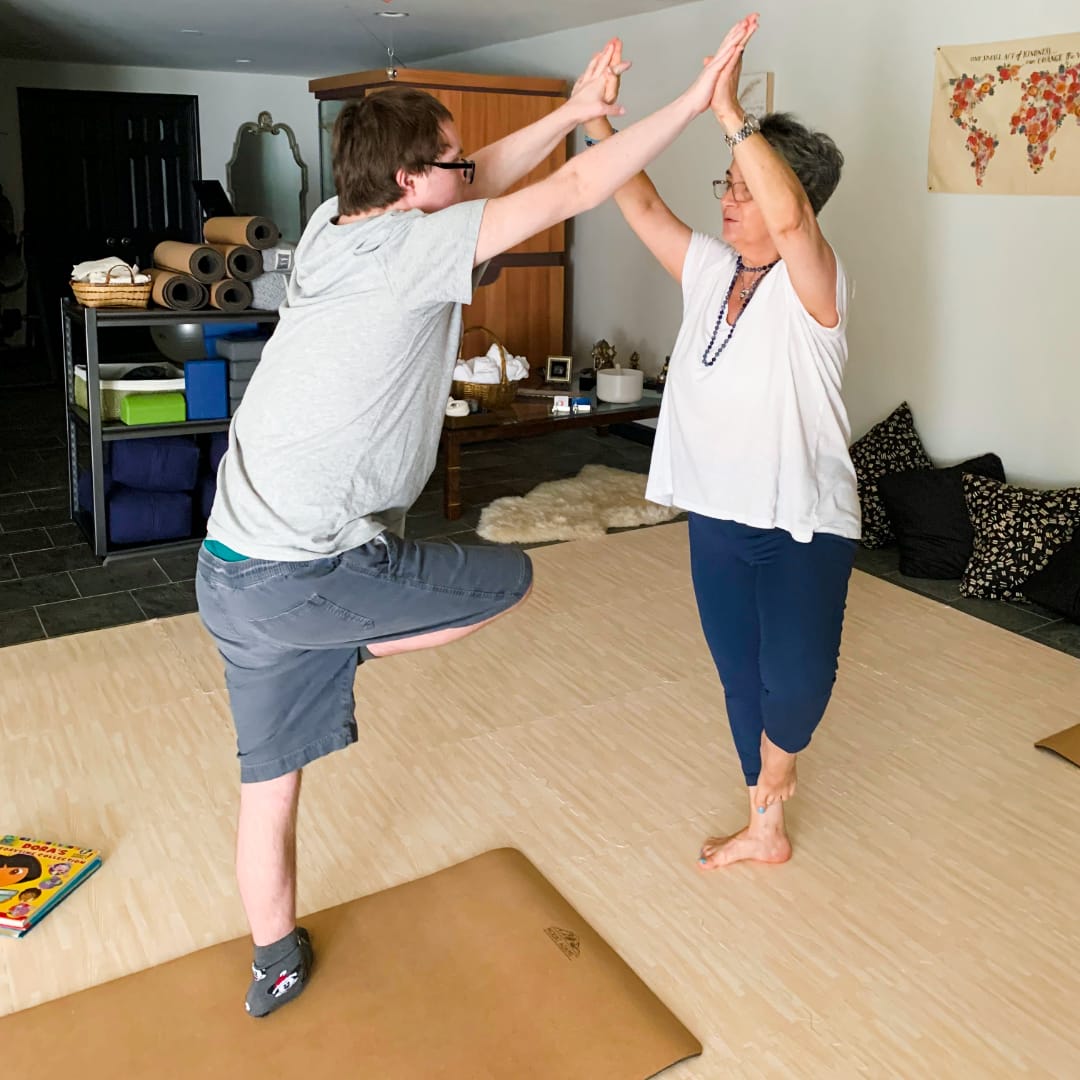
Jacob in a focused pose during a Grounded Kids Yoga class, showing calm concentration

Inclusive Yoga for Diverse Learners

What if the starting point for our humanity is not ability, but vulnerability?

When we approach yoga through the lens of relationship and trust, we see vulnerability not as a flaw, but as a shared human truth. We learn to celebrate interdependence, not just independence. Children and teens with diverse developmental needs deserve tools that honor their full range of experience, not just their ability to meet classroom or societal expectations. Inclusive yoga supports emotional growth, cognitive development, and self-confidence by creating space for every student to participate and thrive.

At Grounded Kids Yoga, we believe inclusive teaching is trauma-aware, emotionally fluent, and built on consistent relationships. Our programs prepare educators, therapists, caregivers, and classroom professionals to adapt poses, sequences, and strategies with clarity and structure for:

  • Autism Spectrum Disorder
  • Sensory processing and emotional dysregulation
  • Down syndrome, cerebral palsy, and motor coordination differences
  • Anxiety, ADHD, trauma history, and learning differences

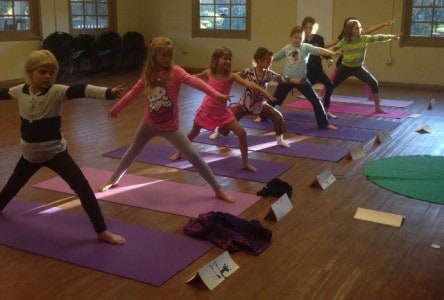
Children with diverse needs are already part of every classroom, family, and community. Inclusive yoga offers a clear and consistent way to support their development through movement, breath, and playful learning. With the right tools, every child can participate meaningfully and feel a sense of trust and belonging.

Why Yoga Helps

Inclusive yoga supports regulation, confidence, and connection across domains. These four categories represent the areas where we consistently see growth and change in children who practice yoga with skilled guidance.

  • Encourages self-monitoring and sequencing
  • Builds impulse control through rhythm and breath
  • Supports divided and sustained attention
  • Teaches structure and follow-through
  • Reinforces vocabulary tied to action, space, and timing
  • Offers repeated models of expressive and receptive language
  • Uses storytelling and imagery to invite deeper comprehension
  • Promotes confident expression and theme-based reflection
  • Builds comfort with transitions and shared space
  • Encourages grounding, listening, and turn-taking
  • Creates a consistent container for exploration and play
  • Supports self-trust and relational awareness
  • Builds core strength and postural stability
  • Strengthens motor planning and movement coordination
  • Activates the vagus nerve to support regulation
  • Supports flexible shifts between alertness and rest

What Training Includes

  • Design accessible and effective class plans
  • Support regulation with adaptable breathwork
  • Use props, pacing, and sequence structure to meet a wide range of needs
  • Recognize how physical, cognitive, and emotional development intersect in movement-based learning

Learn More About Our Approach

Yoga for Children With Diverse Needs
How to Teach Yoga to Kids
Kids Yoga Lesson Planning and Curriculum
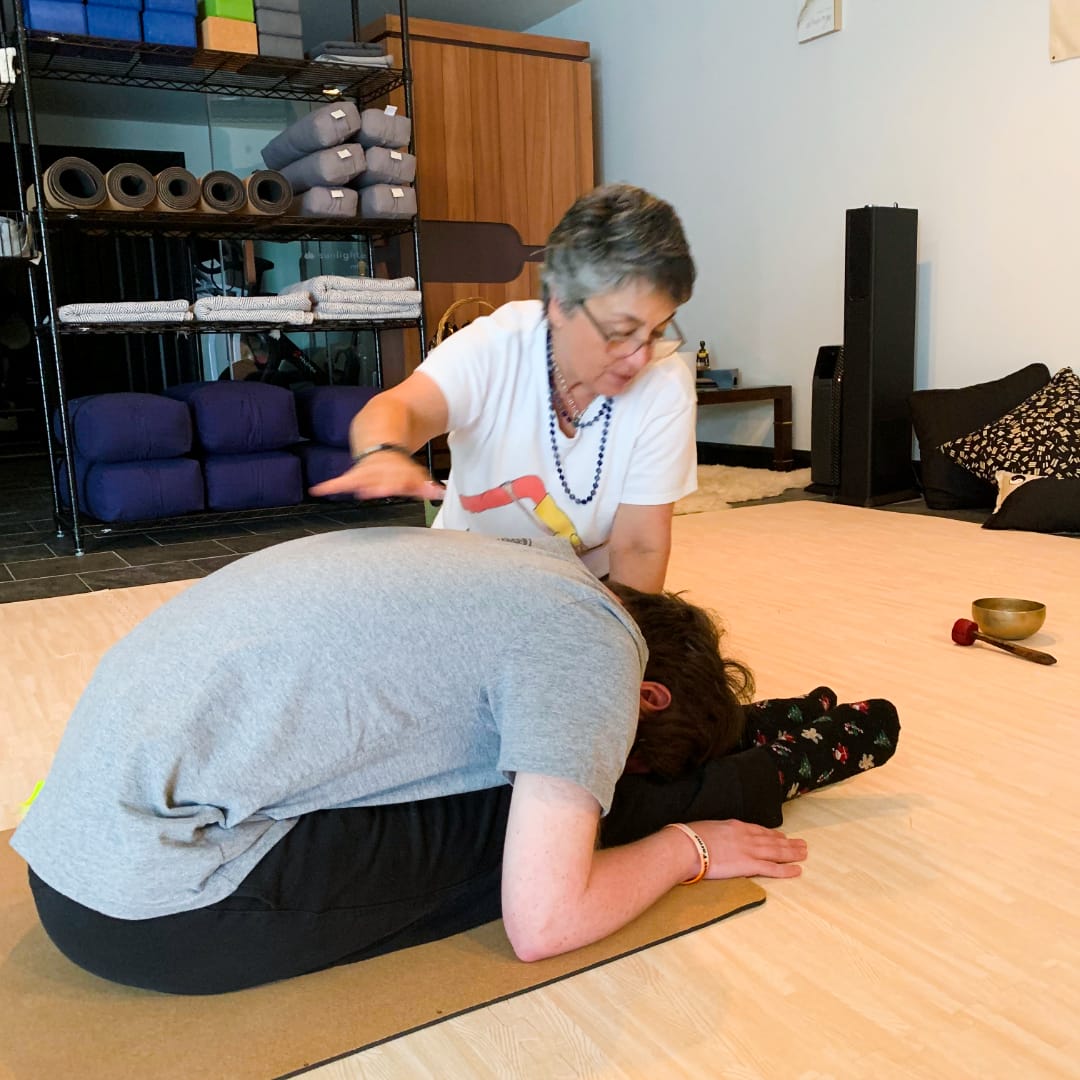
Jacob, a student with Down syndrome, autism, and cancer survivorship, seated calmly on his mat during kids yoga

One of our longtime students, Jacob, has practiced yoga with Sedef for over six years. Jacob lives with Down syndrome and autism and is also a cancer survivor. His presence in class reflects quiet confidence, focus, and trust earned through consistency and care. This year, Jacob received a volunteer service award from the City of Milton, Georgia. His growth is not just physical but relational and his practice embodies what’s possible when inclusive teaching is steady, joyful, and rooted in trust.

More to Explore

  • Inner Flexibility

    BB40 big“How do you become flexible on the Inside?”

    That is the question that I was asked by 4th grade student Isabelle at Yoga Club last week. We were working on acknowledging what we could use more of: strength, balance, or flexibility. After meditating to find what we had the least of, Isabelle raised her hand and asked this question. I stumbled for words, trying to be eloquent and honest on the spot. I spoke of the importance of strength and balance in finding inner flexibility… but honestly this answer felt like it came up short. I found myself reflecting on this question for the rest of the day (the class was over at 3:30pm). I consulted some dear friends and got many good suggestions such as taking a walk, for no other reason than to walk.

    But here is what I came up with, that resonates as the voice of my own truth.

    Being flexible on the inside is a lifelong process. There is a big difference between being loosey goosey with no boundaries, and being open to change and to testing new waters. These two polarities give us a framework for the spectrum of possibility. At the beginning, at the core, and at the point of willingness, is a strong inner truth. This truth is clear, it reminds me who I am, what is most important to me. For some this is a relationship with family or friends. For others their connection to their higher power is the most precious thing in their lives. Maybe for you it’s a sport, or a mission, or catfishing. I check in, sometimes daily, sometimes hourly, with my Truth. Each time I face a new challenge I ask myself “Does this bring me closer or farther away from _________________.”

  • |

    Yoga by Letters: C

    Letter-C

    In C Out C
    Yoga With the C
    Connection, Clarity, Compassion
    C In C

    In C Out C
    Yoga With the C
    Congestion, Confusion, Clenching
    C Out C

    In C Out C
    #KidsYogaCon DC
    Collective, Captivating, Collaboration
    C In C

    In C Out C
    #KidsYogaCon DC
    Competition, Contraction, Comparison
    C Out C

    Letter-C-v2

    CODE for 30% off all products for the next 3 days in honor of the National Kids Yoga Conference, Colleagues, Comradery, and connecting with community. Oh, and of course the confident third letter of the alphabet.


  • Kids Warm to Yoga: How Grounded Kids Yoga Helps Children Thrive Mentally, Physically & Emotionally

    In today’s fast-paced world, yoga may be the one activity kids actually need more of. In this article, Amy Haysman of Grounded Kids Yoga shares how yoga helps children manage stress, build focus, and discover their inner light. From emotional regulation to improved coordination and confidence, yoga offers lifelong tools for kids of all abilities—including those with special needs.