
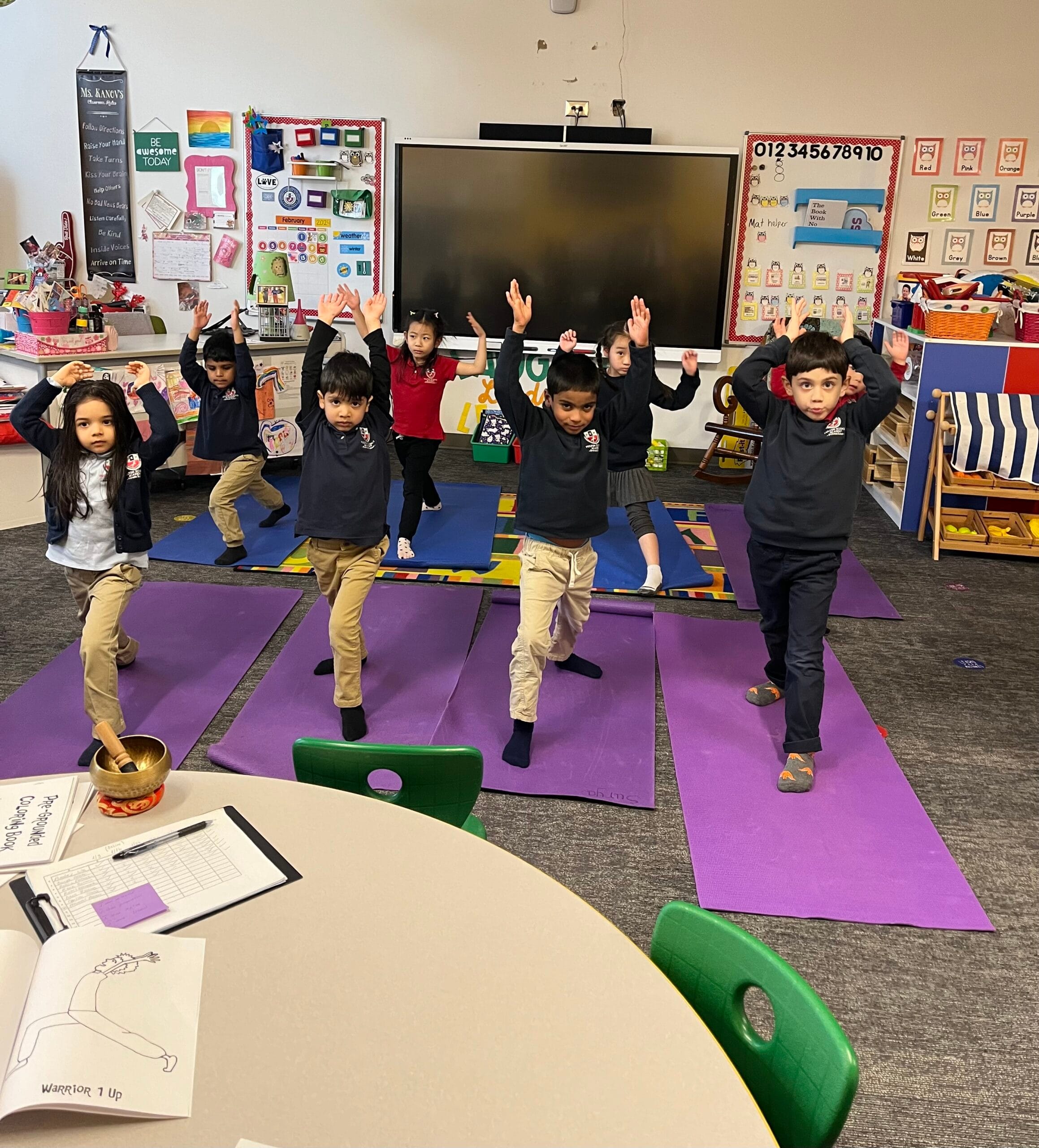
Research Studies on Yoga & Mindfulness for Kids & Teens
What Research Says About Kids Yoga and Mindfulness
Yoga and mindfulness practices for children are backed by a growing body of evidence showing benefits in emotional regulation, attention, behavior, and mental health. If you’ve felt the impact of these practices in your own classroom or home, you’re not alone. If you would like to begin and need evidence, here is the research to support it.
Below are sixteen peer-reviewed studies that illustrate what yoga and mindfulness can do for children and adolescents in both clinical and school settings.
Weaver & Darragh (2015) This review analyzed 16 studies focused on yoga interventions for children and teens with anxiety. Nearly all studies showed reduced anxiety post-intervention, across clinical and school settings. However, due to inconsistent study designs and varied outcome measures, the authors couldn’t generalize the findings across populations. Despite this, yoga was affirmed as a promising strategy to support children’s emotional well-being.
Britton et al. (2014) In a pilot RCT with sixth-grade students, mindfulness was integrated into a required social studies class and taught by regular classroom teachers. The mindfulness group reported higher mindfulness skills and fewer instances of suicidal ideation compared to an active control. Both groups improved on general affect and behavior, but the mindfulness group showed stronger emotional protection. The study supported curriculum-integrated, teacher-led delivery for school mindfulness programs.
Zoogman et al. (2014) This meta-analysis of youth-focused mindfulness programs found small but significant improvements overall, with the strongest results in clinical populations. Benefits included reduced anxiety, depression, and emotional reactivity. Mindfulness also helped youth build present-moment awareness and attention. The study highlighted the importance of tailoring programs to support emotional regulation in high-need populations.
Butzer et al. (2015) This uncontrolled pilot followed one second grade class and one third grade class through a 10-week school yoga program. The second graders showed reduced baseline cortisol and their teacher reported significant improvements in behavior. The third grade class showed neither, and cortisol did not fall further after a single yoga class. With no control group it points a direction rather than proving one.
Khalsa & Butzer (2016) A review of 47 peer-reviewed studies on yoga in school settings found broad support for yoga as a low-cost, effective intervention. Studies reported improvements in emotional regulation, stress response, and behavior. While many trials were preliminary or small in size, the research suggests school-based yoga is both practical and impactful for supporting youth mental health and learning readiness.
Mak et al. (2017) This systematic review focused on 13 studies assessing attention and executive function improvements from mindfulness and yoga. Five showed statistically significant benefits, especially when computerized assessment tools were used. Programs varied widely, but mindfulness practices showed potential to improve sustained attention and cognitive flexibility, especially in students with ADHD or other learning needs.
Butzer et al. (2017) This RCT compared 32 sessions of Kripalu Yoga to traditional PE in middle school students. Girls in the yoga group showed greater emotional self-regulation and were less likely to express interest in smoking post-intervention. This highlights yoga’s potential in adolescent prevention programming.
McKeering & Hwang (2018) A systematic review of 13 studies on school-based mindfulness programs for early adolescents (ages 11–14) found consistent reductions in anxiety, stress, and emotional reactivity. Students reported increased self-awareness and emotional regulation, while teachers observed better focus and classroom behavior. The strongest outcomes were in mental health, though some studies lacked follow-up data. The authors concluded that mindfulness interventions are effective but called for more consistent designs and measurement tools.
Dunning et al. (2018) A meta-analysis of 33 randomized controlled trials involving 3,666 youth revealed small to moderate benefits from mindfulness-based interventions. Children showed improvements in attention, executive function, depression, and anxiety. The greatest gains were seen in emotional outcomes and in programs with more practice hours. The authors emphasized the value of mindfulness for emotional development, particularly when delivered consistently.
Carsley, Khoury & Heath (2018) This meta-analysis of 24 school-based studies (n = 3,977) found small to moderate mental health improvements from mindfulness interventions. Results were strongest in older adolescents (15–18), especially in programs with multiple mindfulness components. Teacher-led delivery showed stronger outcomes than programs led by external facilitators. The study confirmed the importance of developmental fit, consistent leadership, and varied techniques.
Telles et al. (2019) A randomized study on pre-teens compared three practices: high-frequency yogic breathing, breath awareness, and quiet sitting. Students practicing yogic breathing demonstrated the greatest improvements in attention and the largest reductions in anxiety. This study highlights the unique power of structured breath practices in regulating energy and focus.
Jarraya et al. (2019) A 12-week study comparing yoga to physical education in Tunisian kindergartens showed that the yoga group improved in visual attention, motor coordination, and reduced signs of hyperactivity. These early findings suggest that structured yoga programs may be more developmentally beneficial than traditional PE for young learners.
Lack et al. (2020) A nursing-led review of 11 studies found that yoga helped children with asthma reduce anxiety and improve breathing. While focused on a specific health condition, the review reinforces yoga’s role in both emotional and physical regulation
Sun et al. (2021) This systematic review of 16 studies on yoga and mindfulness in children aged 3–5 found that 13 reported improved self-regulation and executive functioning. Interventions that lasted six weeks or longer were most effective. The review called for more high-quality studies but affirmed that early intervention matters.
Amitani et al. (2022) A small RCT tested the effects of four weeks of mindfulness yoga videos for children aged 10–15 who were refusing school. Although anxiety scores didn’t shift significantly overall, the yoga group showed lower pulse rates and less fear-based reactivity, suggesting physiological calming and emotional buffering.
Khunti et al. (2023) This systematic review included 21 randomized controlled trials published between 2008 and 2022. Yoga consistently improved outcomes in anxiety, stress, emotional coping, and quality of life. While more high-quality trials are needed, the consistency of results across ages and settings is notable.
Research Comparison
Across 18 studies, a clear picture emerges. Mindfulness and yoga interventions consistently supported children’s emotional regulation, attention, and overall mental health in all ages. The most reliable outcomes seen in programs that include structured breathing, movement, and stillness were reductions in anxiety and improvements in emotional resilience. Several studies also showed gains in attention span and executive function, particularly when interventions included structured, consistent practice.
Programs tended to be more effective when they were developmentally aligned, embedded into the school day, and delivered by trained educators rather than outside facilitators. Interventions that combined breathwork, movement, and mindfulness produced stronger effects than those relying on a single approach. While results varied depending on age group, assessment method, and setting, the evidence supports the use of yoga and mindfulness to promote self-regulation and well-being in both clinical and classroom environments.
How We Put the Evidence Into Action
Grounded Kids Yoga was built around the same principles these studies confirm: children thrive when they have consistent access to movement, breath, and mindfulness in ways that match their developmental needs. We align with the strongest findings from every study in this post. Our programs integrate visual tools, child-centered sequences, trauma-aware language, and classroom-ready routines so educators and families can teach with clarity and care.
Beyond what the published studies show, we’ve witnessed the results firsthand. For over 20 years, Grounded Kids Yoga has worked with children in classrooms, clinics, and community centers across the country. Educators tell us their students are more focused. Parents say their children are sleeping better and handling emotions with greater ease. Therapists and counselors report stronger co-regulation and clearer self-expression in kids who practice regularly. We’ve seen nonverbal children chant during class. We’ve seen students on the autism spectrum build trust through breath and shared movement. We’ve seen entire schools shift their climate when mindfulness becomes part of the routine. The research supports yoga for kids, and so do thousands of children, families, and teachers who’ve brought these practices to life.
We offer certification programs, SEL-integrated curriculum bundles, and printable teaching materials designed for use in schools, studios, and homes. Whether you’re supporting a child with big emotions, leading a classroom through transitions, or building a culture of regulation and connection, Grounded Kids Yoga gives you tools you can trust.
Start here: Evidence-Based Yoga in Schools: What the Research Shows, the short version for teachers and school leaders.


 Unlieable – To be filled with ones own truth, to the extent that no lies can enter ones being, either form within or without

 As Earth Day approaches this year, I am struck by what it means to truly foster Peace on this planet. I remember as a child, learning about anti-nuclear protestors who chained themselves to fences and were forcibly removed and jailed. These brave souls became my heroines and heroes in the late 1970’s and 1980’s. I was moved to tears singing Dylan’s “Blowing in the Wind” and hearing stories of civil disobedience and the message of non-violent resistance. Later in the 1990’s, when I danced barefoot on my very first Earth Day, a lump would form in my throat when I celebrated each small victory (and the Gigantic Hearts) of environmental protestors who sacrificed so much to save a single tree and worked to preserve open space for our children’s children. Peace.