
Teach Kids Yoga to Ages 3-6, Teens, and Neurodiverse Learners
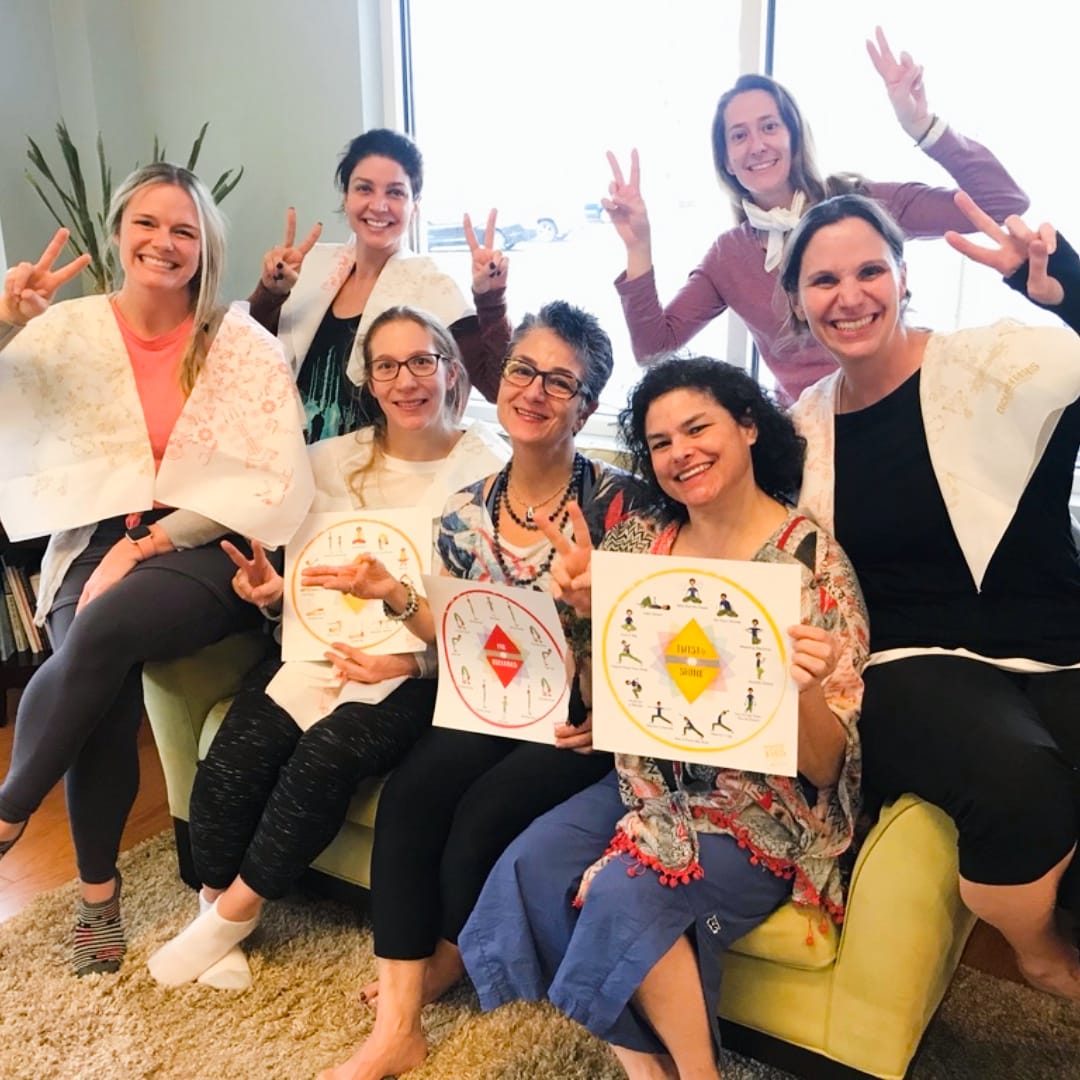
Step 2 expands your reach, your awareness, and your ability to teach with authenticity whether you’re building rhythm and routine for younger kids, creating structure and calm for sensory integration, or holding space for teens to truly connect to themselves and others. Through storytelling, mini flows, and themes that are as personal as they are universal, you’ll explore how to build trust and create experiences that support both regulation and relationship. You’ll also learn how sound, music, and entrainment can shift energy gently. You’ll get tips and tools that are playful, practical, and powerful.
What You’ll Learn:
What's Included
- Your printed Step 2 Training Manual
- Chakra Pose Posters Orange & Yellow
- Chakra Color Code Posters Orange & Yellow
- 5 Elements Flows Poster Set
- Breathing Feather
Frequently Asked Questions
Do I need to complete Step 1 before taking Step 2?
Step 1 is recommended as the foundation, but it isn't required. The four Steps don't have to be taken in strict order, so you can begin with Step 2 if it fits your schedule. Step 2 focuses on teaching yoga to ages 3–6, teens, and neurodiverse learners.
Is Step 2 offered online or in person?
Both. You can join live on Zoom with a cohort or attend in person at our Alpharetta, GA studio. Online participants have their materials mailed to them, so you're fully equipped either way.
How long is Step 2 and when does it meet?
Step 2 is 22 training hours held over a single weekend, Friday evening through Sunday late afternoon. You'll find current dates in the registration section below.
Does Step 2 count toward certification and CEUs?
Yes. The four Steps together make up our 95-hour certification, which is registered with Yoga Alliance for the 95-hour RCYT (Registered Children's Yoga Teacher) designation, and as a Yoga Alliance Continuing Education Provider our trainings count as continuing education hours for registered yoga teachers. For educators, counselors and therapists it depends on your district or your licensing board, so check with them and we will provide all the necessary documentation. Graduate level credit is offered separately through our partner Courses4Teachers.
What makes special needs yoga different from typical yoga?
Yoga for children with diverse needs is often called Inclusive yoga and structured to support sensory input, regulation, communication, and self-confidence for all abilities. We use visuals, props, predictable sequences, and breathwork tools that reduce overwhelm and create a sense of safety.
Some groups who benefit include:
- Children with physical disabilities: to increase mobility, strength, and body awareness
- Children with developmental disabilities: to support executive function and social-emotional skills
- Children with mental health conditions: to regulate anxiety, attention, and mood
- Neurodivergent students: including autism, ADHD, SPD, and learning differences
- Caregivers: for co-regulation and improved self-care
In Grounded Kids Yoga, we modify traditional poses adjust pacing, and offer therapeutic routines like Calm Down Pose, Rock and Roll, and Just a Sip. These help kids process vestibular, proprioceptive, and tactile input while learning at their own pace. The goal is to empower each child to feel capable, connected, and grounded in their own body.
How can I learn how to modify poses for individual needs?
We’ll teach you exactly how and when to do this in
Step 2 of Grounded Kids Yoga Teacher Training. You’ll learn how to offer pose alternatives, choose developmentally appropriate sequences, and use props or visuals to increase accessibility. We also cover safety cues, touch considerations, and sensory supports to meet students where they are. One example: If a child struggles with balance in Tree Pose, we teach how to use the wall or modify to Root Tree Rise, maintaining the grounding intention without triggering frustration. Tree Pose can also be practiced lying down.
How do I adapt yoga for children with different learning styles or sensory needs?
Teach to as many intelligences as you can: kinesthetic, auditory, visual, intrapersonal, and interpersonal. Use pose cards, songs, partner work, and sensory tools like scarves and breathing balls. Grounded classes include clear spatial boundaries, visual pose displays, and predictable rituals.
If a child struggles with touch or transitions, offer choices, take turns, and use cues that empower rather than correct. Our manuals include specific plans for sensory processing disorder, ADHD, Autism, and neurodivergence.
Ready to Join the Training? Register Below
Step 2: Teaching Ages 3–6, Teens, and Neurodiverse Learners
October 16 @ 6:00 pm - October 18 @ 6:30 pm
Making the case to a school? The research on yoga for children, including the studies on ADHD and neurodiverse learners: Evidence-Based Yoga in Schools: What the Research Shows.
Working with teenagers? What yoga does for teen mood, anxiety and self-regulation, and what the research found: Yoga for Teens.
Where Step 2 sits. The full pathway, the dates and what is included: children’s yoga teacher training and certification. The certification can be completed 100% online.
Our Graduates Speak For Themselves
What an amazing and life-changing journey
One Sunday in May after a Kundalini yoga class I overheard a discussion between the yoga teacher and other students about an upcoming Grounded kids teacher training. It got my attention when I heard that one section of the training covers Special needs kids & teens. I thought the learning may be helpful to my own nephew who has different abilities. I decided to take the training regardless of not being a school teacher nor a yoga teacher. What an amazing and life changing journey it has been during the 10 days attending a Grounded Kids Teacher Training Intensive.

Well Planned & Fun
I think the intensive was very informative, very well planned, and very fun. The information was presented in a non-threatening format that was relatable and easy to understand. Sedef was an awesome teacher guiding us to work with younger children and special needs students. Amy was phenomenal teaching concepts that were sometimes difficult to understand. Her style of providing examples and allowing us to develop our own examples allowed us to own our own learning and make it a part of our own lives. They did an awesome job teaching us the poses along with alternatives.

A real career builder, beyond my expectations
The Grounded Kids Yoga Teacher Training Program gave me all of the tools to work with diverse populations of kids and teens. The instruction was clear, generous and enthusiastic. The curriculum is intelligent and beyond my expectations. It is a real career builder and there is a great need for teachers who have trained with Grounded.


