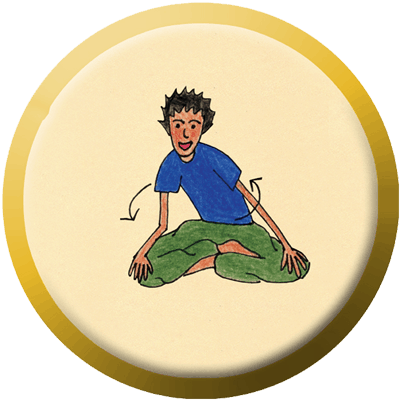
pose_chips-ks

A Zensational Memory Game

pose_chips-ksYoga has become a great way for children of ALL abilities to become aware of their body, in line with their breath, and connected to the beautiful truth and peace within them.  As an occupational therapist and devoted yogi, Allison Morgan of Zensational Kids (see www.zensationalkids.com) offers up a joyful and mindful way to facilatate learning yoga with pose chips.

The Elevator Series Pose Chips help provide a fun, interactive game atmosphere that facilitates learning in a natural and enriching way. Here are a few ideas of how to use these chips in a group or individually to help develop visual and motor skills, motor planning, body awareness and most importantly, laughter.

MEMORY for you and a child

  1. Start with 3 chips, face up. Have the child look at all the chips and go over what each pose is. This can be done either verbally (saying the name of each pose), or motorically (making your body into each pose).
  2. Turn the chips face down. You can test your memory now, or do something else for a few minutes and come back to the chips.
  3. OK, do you remember what poses were on the chips? If you can’t say them, do them. As the child remembers the chips, turn them over to reveal the pictures. If they can’t remember the poses, you do one of them, and see if they remember the name of the pose.
  4. Do you remember the order the chips were in?
  5. OK, once you master 3 chips, try some more.

MEMORY for a group of children

  1. Start with one chip per student. All the children see the chips, say the names of the poses, or do the poses. You will see that their memory is enhanced if they can say them and do them. This demonstrates the power of our body and how important it is in our learning process.
  2. Now count to 5. Everyone STRIKE A POSE. This allows the children to do anything that they remember.
  3. As a group, can they decide what pose is missing? Can they remember any of the missing poses that no one in the group formed? Can they put the poses in the same order that the chips were in?
  4. This is also fun to play with a big group, with a little challenge. Divide the students up into groups of 3, 4, or 5. Every group gets the same number of chips. If each group has 3 students, they get 3 chips, 4 students, 4 chips, etc…. See which TEAM can remember all of their chips and form the sequence with their bodies.
More to Explore

  • Zip the Lip…Potato Chip!

    Often people tend to pull us into their drama. Our awareness can get overwhelmed. What if we allow them time for self-correction? What if we don’t always comment about what we are critical of? What if we focus in a positive way and offer love with enthusiasm?

    I invite you to practice the zip mantra (influenced by the brilliant Paul Muller-Ortega ) on your mat space as well as in your life space. Do tell us how it goes!

  • Grounded? Yes! Restricted? No!

    blank-slate_copyFor many of us, a new year represents a blank slate, a Tabula Rasa. Imagine being able to “refresh” any or all areas of your life. Now visualize this table with two columns, Yes and No. You create your truest life by thoughtfully choosing what goes in the No column and what is a Yes. Everything you say YES to and everything you say NO to matters.  What if your yes’s and no’s were tabulated and at the end of a day, week, year, lifetime, you could see how the data, otherwise known as your life, balanced out?

  • Yoga & Mindfulness is good for kids? Prove it!

    For the research lovers and naysayers, the believers needing back up, parents wanting proof and the educators pursuing funding, this is for you…  IAYSM Research Bibliography A comprehensive listing of research articles and papers compiled by Adenia Linker IASYM Bibliography final Qualitative Evaluation of a High School Yoga Program: Feasibility and Perceived Benefits-Conboy et al…

  • Inspired by the Velveteen Rabbit…How Teachers Become Real.

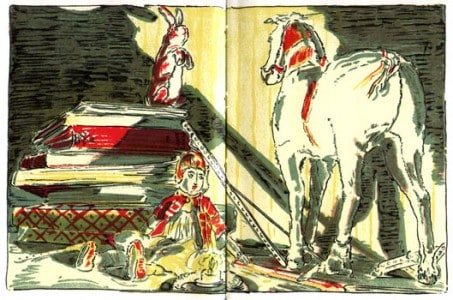
    horse

    The Skin Horse had lived longer in the nursery than any of the others. He was so old that his brown coat was bald in patches and showed the seams underneath, and most of the hairs in his tail had been pulled out to string bead necklaces. He was wise, for he had seen a long succession of mechanical toys arrive to boast and swagger, and by-and-by break their mainsprings and pass away, and he knew that they were only toys, and would never turn into anything else. For nursery magic is very strange and wonderful, and only those playthings that are old and wise and experienced like the Skin Horse understand all about it.

    “What is REAL?” asked the Rabbit one day, when they were lying side by side near the nursery fender, before Nana came to tidy the room. “Does it mean having things that buzz inside you and a stick-out handle?”

    “Real isn’t how you are made,” said the Skin Horse. “It’s a thing that happens to you. When a child loves you for a long, long time, not just to play with, but REALLY loves you, then you become Real.”

    “Does it hurt?” asked the Rabbit.

    “Sometimes,” said the Skin Horse, for he was always truthful. “When you are Real you don’t mind being hurt.”

    “Does it happen all at once, like being wound up,” he asked, “or bit by bit?”

    “It doesn’t happen all at once,” said the Skin Horse. “You become. It takes a long time. That’s why it doesn’t happen often to people who break easily, or have sharp edges, or who have to be carefully kept. Generally, by the time you are Real, most of your hair has been loved off, and your eyes drop out and you get loose in the joints and very shabby. But these things don’t matter at all, because once you are Real you can’t be ugly, except to people who don’t understand.”

    “I suppose you are real?” said the Rabbit. And then he wished he had not said it, for he thought the Skin Horse might be sensitive.

    But the Skin Horse only smiled

    –  From the Velveteen Rabbit by Margery Williams  –